background preloader

Meteors

Facebook Twitter

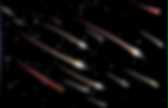
Meteor Showers. If you look up into a dark sky on any clear night you are bound to see a streak of light shoot across the sky. With all the space junk humankind has sent into Earth orbit, that streak could be the disintegration of a man-made object re-entering our atmosphere. However, in most cases the incoming object has a more natural origin. These sky streaks, which most folks call shooting stars, are leftover material from the creation of our solar system. It not only includes the remnants of comets and their dusty tails, but also includes small asteroid fragments.
The Earth encounters this dust and debris as it revolves around the sun. While some of the meteors are just random particles that intercept the Earth’s orbit, meteor showers are the debris left behind by comets. In addition, the solar wind begins to impact the comet’s surface. As the Earth orbits the Sun it encounters some of these dusty comet tail remnants. Therefore, average peak hourly rates are always given.

Moon phases for 2014. Meteorshowersonline.com. Meteor Showers. 2012 Meteor Showers. NOTES These are approximate times for the Lower 48 states; actual shower times can vary. Bright moonlight makes it difficult to see all but the brightest meteors. What is a meteor shower? A meteor shower is a spike in the number of meteors or "shooting stars" that streak through the night sky. Most meteor showers are spawned by comets. As a comet orbits the Sun it sheds an icy, dusty debris stream along its orbit. If Earth travels through this stream, we will see a meteor shower. Although the meteors can appear anywhere in the sky, if you trace their paths, the meteors in each shower appear to "rain" into the sky from the same region.
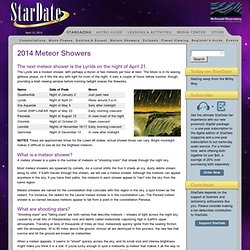
Meteor showers are named for the constellation that coincides with this region in the sky, a spot known as the radiant. What are shooting stars? When a meteor appears, it seems to "shoot" quickly across the sky, and its small size and intense brightness might make you think it is a star. How can I best view a meteor shower?