

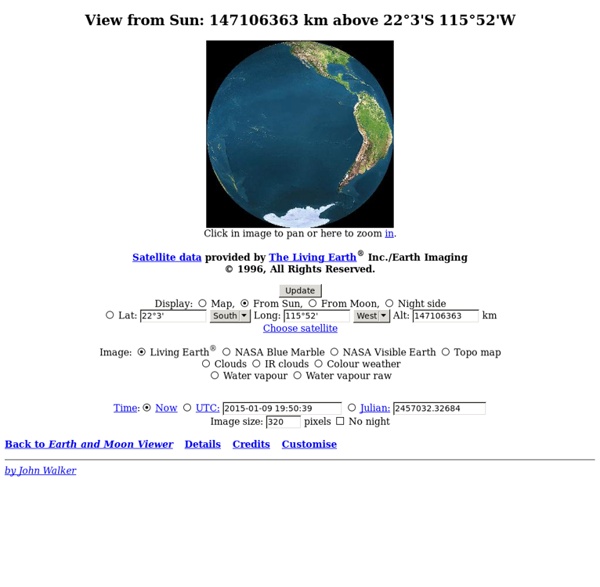
World World is a common name for the whole of human civilization, specifically human experience, history, or the human condition in general, worldwide, i.e. anywhere on Earth[2] or pertaining to anywhere on earth. In a philosophical context it may refer to: In a theological context, world usually refers to the material or the profane sphere, as opposed to the celestial, spiritual, transcendent or sacred. The "end of the world" refers to scenarios of the final end of human history, often in religious contexts. World history is commonly understood as spanning the major geopolitical developments of about five millennia, from the first civilizations to the present. World population is the sum of all human populations at any time; similarly, world economy is the sum of the economies of all societies (all countries), especially in the context of globalization. Etymology and usage 'World', in original sense, when qualified, can also refer to a particular domain of human experience. Philosophy Parmenides
Complete Sun and Moon Data for One Day Use these forms to obtain rise, set, and transit times for the Sun and Moon; civil twilight beginning and end times; and, lunar phase information. First, specify the date and location in one of the two forms below. Then, click the "Get data" button at the end of the form. Use Form A for cities or towns in the U.S. or its territories. Use Form B for all other locations. Both forms are immediately below. Be sure to read the Notes section located after the two forms, especially if you wish to use these data for legal purposes. Form A - U.S. Form B - Locations Worldwide Notes Legal Use of the Calculated Data Please see Astronomical Data Used for Litigation if you are interested in using the data produced by this service for legal purposes. Definitions For more information on the terms used, see the Astronomical Almanac On-line Glossary, Rise, Set, and Twilight Definitions or Phases of the Moon and Percent of the Moon Illuminated in the Astronomical Information Center. Time Formats Time Zones
Flash Earth - Zoom into satellite and aerial imagery of the Earth in Flash Job Search | one search. all jobs. Indeed Breathingearth - CO2, birth & death rates by country, simulated real-time March 26, 1999 - Impact Moon Discover the cosmos! Each day a different image or photograph of our fascinating universe is featured, along with a brief explanation written by a professional astronomer. March 26, 1999 Impact Moon Image Credit: Galileo Project, JPL, NASA Explanation: The Moon's surface is covered with craters, scars of frequent impacts during the early history of the solar system. Tomorrow's picture: Stars Without Galaxies Authors & editors: Robert Nemiroff (MTU) & Jerry Bonnell (USRA)NASA Technical Rep.: Jay Norris.
makes texting and talking free. Textfree free number, calls, texts get a free phone number forfree calling and texting The Decline of Classic Nick | Article Thinking over the glory days of my childhood I always feel incredibly blessed that I was of the generation who experienced Nickelodeon at its prime. Anytime the topic of this once great network is brought up in conversation it is impossible to predict when it will ever end. There was far too much quality entertainment on Nickelodeon in the early to late '90s that it made you wonder how things could possibly turn sour? But, by before the '90s took its final bow, things took a turn for the worse. Our beloved shows that we grew up on were being stripped off the air and appalling new shows took their spots. Shows from the previous decade such as "Double Dare" and "Hey Dude", a live-action show that detailed the lives of teenagers working on a ranch just outside of Arizona, proudly marched their way into the '90s. "Clarissa Explains It All" was an amazing new program that starred an up and coming, young Melissa Joan Hart as Clarrisa Darling. Enter 1994. "Kablam!"
2002 November 14 - The Sharpest View of the Sun Discover the cosmos! Each day a different image or photograph of our fascinating universe is featured, along with a brief explanation written by a professional astronomer. 2002 November 14 Explanation: This stunning image shows remarkable and mysterious details near the dark central region of a planet-sized sunspot in one of the sharpest views ever of the surface of the Sun.
Otomata 16 Jul 2011 Click on the grid below to add cells, click on cells to change their direction, and press play to listen to your music. Update: Click here to get Otomata for your iPhone / iPod / iPad! Official facebook page: Also this reddit page has many examples: And there is a subreddit for Otomata: Otomata is a generative sequencer. Each alive cell has 4 states: Up, right, down, left. at each cycle, the cells move themselves in the direction of their internal states. This set of rules produces chaotic results in some settings, therefore you can end up with never repeating, gradually evolving sequences. If you encounter something you like, just press “Copy Piece Link” and save it somewhere, or better, share it! Here is something from me to start with: And here is an action video: Here are replies to some common questions: Q: MIDI Output?
2002 July 18 - Sunspot Region 30 Discover the cosmos! Each day a different image or photograph of our fascinating universe is featured, along with a brief explanation written by a professional astronomer. 2002 July 18 Sunspot Region 30 Credit: MDI, SOHO, ESA, NASA Explanation: The solar active region designated number 10030 (or simply region 30) is now appearing on the visible hemisphere of the closest star. Tomorrow's picture: all-sky candy Authors & editors: Robert Nemiroff (MTU) & Jerry Bonnell (USRA)NASA Technical Rep.: Jay Norris.
2008 June 1 - A Twisted Solar Eruptive Prominence Discover the cosmos! Each day a different image or photograph of our fascinating universe is featured, along with a brief explanation written by a professional astronomer. 2008 June 1 A Twisted Solar Eruptive Prominence Credit: SOHO Consortium, EIT, ESA, NASA Explanation: Ten Earths could easily fit in the "claw" of this seemingly solar monster. Tomorrow's picture: under Phoenix Authors & editors: Robert Nemiroff (MTU) & Jerry Bonnell (UMCP)NASA Official: Phillip Newman Specific rights apply.NASA Web Privacy Policy and Important NoticesA service of:ASD at NASA / GSFC& Michigan Tech. September 23, 1999 - Equinox and Eruptive Prominence Discover the cosmos! Each day a different image or photograph of our fascinating universe is featured, along with a brief explanation written by a professional astronomer. September 23, 1999 Explanation: Today, the Sun crosses the celestial equator and seasons change from Summer to Fall in the north and Winter to Spring in the southern hemisphere. Defined by the Sun's position in sky the event is known as an equinox - the length of daylight is equal to the length of night.